Resumption of Digging Deep and other Weekly Programs

Digging Deep and other Weekly Programs have resumed.

Digging Deep comes up this Tuesday from 6:30pm – 8:00pm, and the first topic in the series is: A Living Example in Word
Faith Clinic Comes up on Thursday from 6:30pm – 8:00pm


Resumption of Ministers Prayer

Ministers Prayer, which holds on Saturday 6:00pm – 7:00pm, has resumed. All ministers should take note and endeavour to attend promptly and regularly


Arrival of a new Baby to the Eromosele Family

A baby was born to the Eromosele Family on Tuesday, 8th April 2014. Further announcements on this will be made later.


Resumption of House Fellowship

The House Fellowship program resumes today, Sunday, 13th April 2014. Please, ensure you attend.

It is a mandate from National Headquarters that every member of Redeemed Christian Church of God (RCCG) must belong to a House Fellowship group. If you don’t belong to any House Fellowship, locate the one nearest to you and start attending. You can download the House Fellowship Centres from our website by Clicking on the Download menu under Resources


Emailing of Announcements, Articles, Sermons and Events to Church Members

The Church has started sending Announcements, Articles, Sermons and Events to Church Members Email Addresses. If you have not been receiving emails, please go to the Church website, www.rccgmiraclecentre.org, and subscribe to our newsletter.


Jesus, our Scapegoat – Part 2, by Deacon Mike Ben

John 19:16 “Then he delivered Him to them to be crucified, so they took Jesus and led Him away”

 Implication
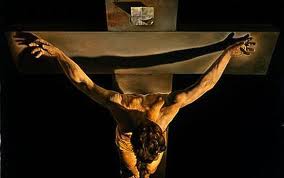
To Christians, both of these rites are regarded as a foreshadowing of (and must therefore find their ultimate meaning in) the future sacrificial Crucifixion of Jesus Christ.

Christians believe that, through dying on the cross, Christ not only “propitiated” God’s wrath over sin, but also “expiated” us from carrying the burden of sin, by actually doing away with it as Jesus-Christ-Our-Scapegoat.

 Propitiation:  By “propitiation” we come to understand the notion of “imputed righteousness”. We believe that even though we still remain sinners, from God’s perspective, we appear as being covered and shielded by “the righteousness of Christ” and are therefore “counted” as righteous!

 Expiation: By “expiation” on the other hand, we come to understand that we have actually been physically “cleansed” of our sins and thereby “made righteous”. Jesus does not just hide our sin but in fact completely removes them, enabling us to “appear righteous” in the eyes of God!

 Jesus, being both Jesus Christ “The Lords Goat”, as well as “Jesus-Christ-Our-Scapegoat”, therefore fulfilled both of these roles. He is our savior and our redeemer fulfilling both of these sacrificial roles, not because we deserve it, but out of His love for us! Ephesians 2:4-9

 
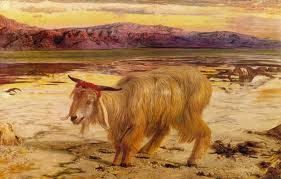
The Scapegoat

The Scapegoat

A foreshadow of Jesus-Christ-Our-Scapegoat


  Jesus-Christ-Our-Scapegoat Crucified

Jesus-Christ-Our-Scapegoat Crucified

  Jesus has been all night in agony, He had spent the early morning at the hall of Caiaphas, He had been hurried from Caiaphas to Pilate, from Pilate to Herod, and from Herod back again to Pilate; He had therefore, but little strength left, and yet neither refreshment nor rest were permitted Him. They were eager for His blood, and therefore led Him out to die, loaded with the cross.  “The old rugged cross”- This is the most beautiful song ever… I will always cherish the cross that Jesus died for me and all sinners.

 What do we learn here as we see our blessed Lord led forth? Do we not perceive that truth which was set forth in shadow by the scapegoat? Did not the high-priest bring the scapegoat, and put both his hands upon its head, confessing the sins of the people, that thus those sins might be laid upon the goat, and cease from the people? Then the goat was led away by a fit man into the wilderness, and it carried away the sins of the people, so that if they were sought they could not be found. 

 Now we see Jesus brought before the priests and rulers, who pronounced Him guilty; God himself imputes our sins to Him, “the Lord hath laid on Him the iniquity of us all;” “He was made sin for us;” and, as substitute for our guilt, bearing our sins upon his shoulders, represented by the cross; we see the great Scapegoat led away by the appointed officers of justice. Beloved, can you feel assured that He carried your sins?  As you look at the cross upon His shoulder, does it represent you sin? There is one way by which you can tell whether He carried your sin or not, and trusted.  Have you laid your hands upon His head, confessed your sins, and trust in Him? Then your sin lies not on you; it has all been transferred by blessed imputation to Christ, and He bears it on His shoulder a load heavier than the cross.

 Conclusion
Let not the picture vanish till you have rejoiced in your own deliverance, and adores the loving Redeemer upon whom your iniquities were laid. He paid the expensive price for our redemption, what no one can do, yes He paid it all.  However, Jesus did become sin and therefore, He became sickness that we might become holy and healthy and walk in His health. Jesus did not commit a sin to become sin. No, it was put upon Him by God the Father. Jesus walked in righteousness until the time of the cross, and there on the cross, He accepted to take the sins of the World upon Himself. We do not have to commit a righteous act to become righteous; we openly accept the righteousness of Jesus; it is a free gift. The work of the cross is the divine exchange. He exchanged our sins for His righteousness. We have become the righteousness of God! Glory be to God! Hosanna, Hosanna in the Highest.

 Happy Easter Celebration.

 Dcn. Mike Ben                                                                                             


The Elect of God, by Deacon Mike Ben

Several years ago, an elderly man was preaching in a ‘danfo bus’ within Lagos and put this question before the passengers “Who are the elects of God?”  The message touched my heart and I resolved to be one of the elects of God.  Basically, the “elect of God” are those whom God has predestined to salvation. They are called the “elect” because that word denotes the concept of choosing. Every four years in Nigeria, we “elect” a President – i.e., we choose who will serve in that office. The same goes for God and those who will be saved; God chooses those who will be saved. These are the elect of God.

As it stands, the concept of God electing those who will be saved isn’t controversial. What is controversial is how and in what manner God chooses those who will be saved. Throughout church history, there have been two main views on the doctrine of election (or Predestination). One view, which we will call the prescient or foreknowledge view, teaches that God, through His omniscience, knows those who will in the course of time choose of their own free will to place their faith and trust in Jesus Christ for their salvation. On the basis of this divine foreknowledge, God elects these individuals “before the foundation of the world.” Ephesians 1:4 says “For he chose us in him before the creation of the world to be holy and blameless in his sight in love.” This view is held by the majority of American evangelicals.

The second main view is the Augustinian view, which essentially teaches that God not only divinely elects those who will have faith in Jesus Christ, but also divinely elects to grant to these individuals the faith to believe in Christ. In other words, God’s election unto salvation is not based on a foreknowledge of an individual’s faith, but is based on the free, sovereign grace of Almighty God. God elects people to salvation, and in time these people will come to faith in Christ because God has elected them.

The difference boils down to this: who has the ultimate choice in salvation – God or man? In the first view (the prescient view), man has control; his free will is sovereign and becomes the determining factor in God’s election. God can provide the way of salvation through Jesus Christ, but man must choose Christ for himself in order to make salvation real. Ultimately, this view makes God powerless and robs Him of His sovereignty. This view puts the Creator at the mercy of the creature; if God wants people in heaven, He has to hope that man will freely choose His way of salvation. In reality, the prescient view of election is no view of election at all, because God is not really choosing – He is only confirming. It is man who is the ultimate chooser.

In the Augustinian view, God has control; He is the one who, of His own sovereign will, freely chooses those whom He will save. He not only elects those whom He will save, but He actually accomplishes their salvation. Rather than simply make salvation possible, God chooses those whom He will save and then saves them. This view puts God in His proper place as Creator and Sovereign.

The Augustinian view is not without problems of its own. Critics have claimed that this view robs man of his free will. If God chooses those who will be saved, then what difference does it make for man to believe? Why preach the gospel? Furthermore, if God elects according to His sovereign will, then how can we be responsible for our actions? These are all good and fair questions that need to be answered. A good passage to answer these questions is Romans 9, the most in-depth passage dealing with God’s sovereignty in election.

The context of the passage flows from Romans 8, which ends with a great climax of praise: “For I am convinced that… [nothing] in all creation, will be able to separate us from the love of God that is in Christ Jesus our Lord” (Romans 8:38-39). This leads Paul to consider how a Jew might respond to that statement. While Jesus came to the lost children of Israel and while the early church was largely Jewish in makeup, the gospel was spreading among the Gentiles much faster than among the Jews. In fact, most Jews saw the gospel as a stumbling block (1 Corinthians 1:23) and rejected Jesus. This would lead the average Jew to wonder if God’s plan of election has failed, since most Jews reject the message of the gospel.

Throughout Romans 9, Paul systematically shows that God’s sovereign election has been in force from the very beginning. He begins with a crucial statement: “For not all who are descended from Israel are Israel” (Romans 9:6). This means that not all people of ethnic Israel (that is, those descended from Abraham, Isaac and Jacob) belong to true Israel (the elect of God). Reviewing the history of Israel, Paul shows that God chose Isaac over Ishmael and Jacob over Esau. Just in case anyone thinks that God was choosing these individuals based on the faith or good works they would do in the future, he adds, “Though they [Jacob and Esau] were not yet born and had done nothing either good or bad – in order that God’s purpose of election might continue, not because of works but because of him who calls” (Romans 9:11).

 At this point, one might be tempted to accuse God of acting unjustly. Paul anticipates this accusation in v. 14, stating plainly that God is not unjust in any way. “I will have mercy on whom I have mercy, and I will have compassion on whom I will have compassion” (Romans 9:15). God is sovereign over His creation. He is free to choose those whom He will choose, and He is free to pass by those whom He will pass by. The creature has no right to accuse the Creator of being unjust. The very thought that the creature can stand in judgment of the Creator is absurd to Paul, and it should be so to every Christian as well. The balance of Romans 9 substantiates this point.

 As already mentioned, there are other passages that talk to a lesser extent on the topic of God’s elect (John 6:37-45 and Ephesians 1:3-14, to name a couple). The point is that God has ordained to redeem a remnant of humanity to salvation. These elect individuals were chosen before the creation of the world, and their salvation is complete in Christ. As Paul says, “For those whom he foreknew he also predestined to be conformed to the image of his Son, in order that he might be the firstborn among many brothers. And those whom he predestined he also called, and those whom he called he also justified, and those whom he justified he also glorified” (Romans 8:29-30).

 Conclusion:
The only way to become the Elect of God is through the Blood of Jesus Christ. When you repent of your sins and ask Jesus Christ into your heart then you are in the Elect of God. See God sent his only begotten Son Jesus the Christ to earth to die on the cross for our sins. He chooses to give that free gift to all that want to receive it but it is our choice on whether we accept it or not. Romans 8:33, Mark 13:22, Colossians 3:12, I Peter 1:2.

 Dcn. Mike Ben


Jesus, our Scapegoat – Part 1, by Deacon Mike Ben

John 19:16 “Then he delivered Him to them to be crucified, so they took Jesus and led Him away”

 Introduction
The origins of the term “scapegoat” come from Leviticus 16 and the sacrifice at the heart of the Day of Atonement. Leviticus 16:6-10 provides a summary of the offerings: bull for the high priest’s sin offering and then two goats – one for God and their sin offering and one for the picture we infer from the goat sent into the wilderness. It is interesting and noteworthy that atonement must first be made for Aaron. “No minister can lead people where he has not been. No person can speak of the forgiveness of sins whose own sins have not been forgiven…The Day of Atonement began with Aaron, not with the people.” (Of course, Christ had no such need. Compare Hebrews 5:1-3 and Hebrews 7:26-28).

 Meaning of Scapegoat
Scapegoat means one who bears blame unfairly or a person who is unfairly blamed for something that others have done – is derived from a ceremony recorded in Leviticus 16.  Since a goat was sent into the wilderness to bear the sins of the Israelites, many presume this scapegoat called azazel in Hebrew is Jesus Christ. Others say Satan wants us to view him as a scapegoat, someone unjustly blamed for sin by an unfair God. The ceremony where God personally identifies this goat delivers some of the most profound lessons we can learn about the Day of Atonement—and identifies the azazel for what he is.

 The Hebrew word for “scapegoat” here is azazel, and it means “the goat of departure” or the goat of escape. According to the Merriam-Webster Dictionary, though, scapegoat means “one that bears the blame for others.” But notice, the original Hebrew word azazel has no implication of bearing blame; rather, the azazel is simply a goat of departure. Leviticus 16:8 says that one lot is for the Lord and the other is for the azazel – not for the Lord. The goat that the Lord’s lot fell on was to be slain, just as Jesus Christ was slain (verse 9). The azazel would not be slain, but driven alive into the wilderness (verse 10).

In Leviticus 16:20-22, the scapegoat’s role is presented in more detail. They were to “lay both hands on the head of the live goat and confess over it all the wickedness and rebellion of the Israelites – all their sins and put them on the goat’s head”. (This parallels the principle of substitutionary atonement seen throughout the sacrificial system but highlighted here for this one special day.) Then the goat was sent into the desert and verse 22 says that “the goat will carry on itself all their sins to a solitary place”. (Interestingly, some people believe that Christ was baptized on Day of Atonement and then went to the desert.)

 Two Identical Goats
In ancient Israel, God commanded that a special ceremony take place on the Day of Atonement. In Leviticus 16:5, we read that the high priest was to take two kids of the goats as a sin offering. But first, Aaron, high priest at the time, was to offer a sin offering for himself (verse 6). Then we read about the instructions regarding these two goats: “And he shall take the two goats, and present them before the Lord at the door of the tabernacle of the congregation. And Aaron shall cast lots upon the two goats; one lot for the Lord, and the other lot for the scapegoat” (verses 7-8).
Goat No. 1 symbolizes forgiveness and its blood price; goat No. 2, the scapegoat, symbolizes repentance, removal of sin and guilt. Of course, in Christian theology, the ordering of the two goats is important. One last thought: we improperly apply the concept of scapegoat ironically, by blame-shifting.

 After the azazel was sent into the wilderness, both the high priest and the fit man (before he returned to the camp) had to wash themselves and their clothes (Leviticus 16:23-26).

This “fit man” represented the angel in Revelation 20:1-3 who will lay hold of the dragon and seal him in the bottomless pit when this day is fulfilled.

 The commentaries are divided as to whether the azazel is Jesus Christ or Satan the devil – but the Bible makes the answer plain. This really shouldn’t be surprising because even the high priest could not tell which goat was which; God Himself would reveal which goat represented Christ and which represented Satan only after the high priest had solemnly appealed to Him through the casting of lots. If the azazel were simply another representation of Christ, there would be no real need to distinguish between the two goats—but there is a real need, and one that we face daily. The truth is, without God’s direct intervention, even we can’t tell Satan apart from Jesus Christ! Satan would like nothing better than for us to mistake him for our Savior and High Priest.

 Today, our sins have been forgiven by Jesus Christ’s sacrifice; when the Day of Atonement is fulfilled, the original blame for these sins will be put back where it belongs: on Satan the devil, who will be completely removed from the presence of God and suffer mental torment forever as justice demands (Revelation 20:10).

 The Reason for the Scapegoat
The scapegoat is a type or figure of Christ’s atonement to save mankind in the Old Testament Sanctuary service. When our first parents sinned in Eden, they would have died at that very instance if Jesus had not provided a way out to save them. Gen 3:15 (NIV) – “And I will put enmity between you and the woman, and between your offspring and hers; he will crush your head, and you will strike his heel.”

 To be continued.

 Dcn. Mike Ben


Success Encounter re-fashioning

The Success Encounter, which holds on the second Sunday of every month, has been re-fashioned to include other topics or Titles.

The title of next Sunday (13th April 2014) Success Encounter is “Tithing and First Fruits”.

Make sure you don’t miss any Success Encounter program.


Drama Rehearsal

The Drama Rehearsal continues this Thursday, 10th April 2014.

New Members are welcome.