Several years ago, an elderly man was preaching in a ‘danfo bus’ within Lagos and put this question before the passengers “Who are the elects of God?” The message touched my heart and I resolved to be one of the elects of God. Basically, the “elect of God” are those whom God has predestined to salvation. They are called the “elect” because that word denotes the concept of choosing. Every four years in Nigeria, we “elect” a President – i.e., we choose who will serve in that office. The same goes for God and those who will be saved; God chooses those who will be saved. These are the elect of God.
As it stands, the concept of God electing those who will be saved isn’t controversial. What is controversial is how and in what manner God chooses those who will be saved. Throughout church history, there have been two main views on the doctrine of election (or Predestination). One view, which we will call the prescient or foreknowledge view, teaches that God, through His omniscience, knows those who will in the course of time choose of their own free will to place their faith and trust in Jesus Christ for their salvation. On the basis of this divine foreknowledge, God elects these individuals “before the foundation of the world.” Ephesians 1:4 says “For he chose us in him before the creation of the world to be holy and blameless in his sight in love.” This view is held by the majority of American evangelicals.
The second main view is the Augustinian view, which essentially teaches that God not only divinely elects those who will have faith in Jesus Christ, but also divinely elects to grant to these individuals the faith to believe in Christ. In other words, God’s election unto salvation is not based on a foreknowledge of an individual’s faith, but is based on the free, sovereign grace of Almighty God. God elects people to salvation, and in time these people will come to faith in Christ because God has elected them.
The difference boils down to this: who has the ultimate choice in salvation – God or man? In the first view (the prescient view), man has control; his free will is sovereign and becomes the determining factor in God’s election. God can provide the way of salvation through Jesus Christ, but man must choose Christ for himself in order to make salvation real. Ultimately, this view makes God powerless and robs Him of His sovereignty. This view puts the Creator at the mercy of the creature; if God wants people in heaven, He has to hope that man will freely choose His way of salvation. In reality, the prescient view of election is no view of election at all, because God is not really choosing – He is only confirming. It is man who is the ultimate chooser.
In the Augustinian view, God has control; He is the one who, of His own sovereign will, freely chooses those whom He will save. He not only elects those whom He will save, but He actually accomplishes their salvation. Rather than simply make salvation possible, God chooses those whom He will save and then saves them. This view puts God in His proper place as Creator and Sovereign.
The Augustinian view is not without problems of its own. Critics have claimed that this view robs man of his free will. If God chooses those who will be saved, then what difference does it make for man to believe? Why preach the gospel? Furthermore, if God elects according to His sovereign will, then how can we be responsible for our actions? These are all good and fair questions that need to be answered. A good passage to answer these questions is Romans 9, the most in-depth passage dealing with God’s sovereignty in election.
The context of the passage flows from Romans 8, which ends with a great climax of praise: “For I am convinced that… [nothing] in all creation, will be able to separate us from the love of God that is in Christ Jesus our Lord” (Romans 8:38-39). This leads Paul to consider how a Jew might respond to that statement. While Jesus came to the lost children of Israel and while the early church was largely Jewish in makeup, the gospel was spreading among the Gentiles much faster than among the Jews. In fact, most Jews saw the gospel as a stumbling block (1 Corinthians 1:23) and rejected Jesus. This would lead the average Jew to wonder if God’s plan of election has failed, since most Jews reject the message of the gospel.
Throughout Romans 9, Paul systematically shows that God’s sovereign election has been in force from the very beginning. He begins with a crucial statement: “For not all who are descended from Israel are Israel” (Romans 9:6). This means that not all people of ethnic Israel (that is, those descended from Abraham, Isaac and Jacob) belong to true Israel (the elect of God). Reviewing the history of Israel, Paul shows that God chose Isaac over Ishmael and Jacob over Esau. Just in case anyone thinks that God was choosing these individuals based on the faith or good works they would do in the future, he adds, “Though they [Jacob and Esau] were not yet born and had done nothing either good or bad – in order that God’s purpose of election might continue, not because of works but because of him who calls” (Romans 9:11).
At this point, one might be tempted to accuse God of acting unjustly. Paul anticipates this accusation in v. 14, stating plainly that God is not unjust in any way. “I will have mercy on whom I have mercy, and I will have compassion on whom I will have compassion” (Romans 9:15). God is sovereign over His creation. He is free to choose those whom He will choose, and He is free to pass by those whom He will pass by. The creature has no right to accuse the Creator of being unjust. The very thought that the creature can stand in judgment of the Creator is absurd to Paul, and it should be so to every Christian as well. The balance of Romans 9 substantiates this point.
As already mentioned, there are other passages that talk to a lesser extent on the topic of God’s elect (John 6:37-45 and Ephesians 1:3-14, to name a couple). The point is that God has ordained to redeem a remnant of humanity to salvation. These elect individuals were chosen before the creation of the world, and their salvation is complete in Christ. As Paul says, “For those whom he foreknew he also predestined to be conformed to the image of his Son, in order that he might be the firstborn among many brothers. And those whom he predestined he also called, and those whom he called he also justified, and those whom he justified he also glorified” (Romans 8:29-30).
Conclusion:
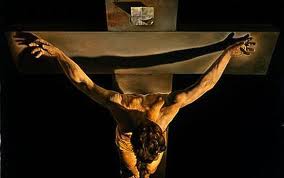
The only way to become the Elect of God is through the Blood of Jesus Christ. When you repent of your sins and ask Jesus Christ into your heart then you are in the Elect of God. See God sent his only begotten Son Jesus the Christ to earth to die on the cross for our sins. He chooses to give that free gift to all that want to receive it but it is our choice on whether we accept it or not. Romans 8:33, Mark 13:22, Colossians 3:12, I Peter 1:2.
Dcn. Mike Ben