Biblical Standard of Friendship – Part Two, by Deacon Mike Ben

A friend loveth at all times, and a brother is born for adversity (Proverbs 17:17)

Practical steps to be a good friend

6. Can be trusted– Pro 27:6 {Wounds from a friend can be trusted, but an enemy multiplies kisses} A friend is one who is honest with you no matter what. There are people in this world that will flatter you and exalt you to make you feel good, but a friend is one who sees through all that and speaks the truth. Be careful of the flatterer. 

7. Give earnest counsel Pro 27:9 {Perfume and incense bring joy to the heart, and the pleasantness of one’s friend springs from his earnest counsel.} The counsel of a friend is so refreshing, that the Bible says it is like perfume and incense. Beware of those “friends” who counsel you for their own gain. 

8. Lift up – Eccl: 4:10 {If one falls down, his friend can help him up. But pity the man who falls and has no one to help him up!} An old and proved saying goes like this, “A friend in need is a friend indeed.” How true that is! We live in a world that uses us for its own gain and then dumps us when our usefulness is over. Christ did not give us up when we were dying in sin. He gave his life for us when we needed him and that is a true friend. John 15:13 says “Greater love hath no man than this, that a man lay down his life for his friends”

9.  Listen. Listening is so important not to underestimate, but it can be hard to do. The best way to listen is to try and understand the situation from your friends’ point of view. If you aim to do this, you’ll naturally find yourself beginning to ask the right sort of questions and they will appreciate having someone who really cares about how they feel and what they’re going through. You don’t need to have all the answers, and you shouldn’t assume your friend wants advice – they might just want to talk so that they can work out what they’re going to do themselves.

10.  Ask them what they need. If you’re worried about someone and you want to be there for them, just ask them what they need – that way, you know what they find helpful during tough times, and you can be there in a way that’s most useful to them.

11.  Get physical. Smiles and hugs are a great way to show friends that they’re not alone, that you’re there for them, and that they are important.

12.  Keep in touch. Even if you aren’t nearby each other, making an effort to keep in touch through facebook, emails, text messages, BB, WhatsApp and calls will show your friend you are there for them.

13.  Tell them how you feel. You don’t have to make a big deal of it all the time but sometimes there are moments where letting someone know that they’re important to you through something you say, can make a big difference to how someone is feeling.

14.  Get the facts. If your friend has a medical condition, or a mental health issue, a good way to offer support is to learn about what they’ve been diagnosed with. Taking an interest in what they’re going through shows that you care, and that you’re planning to stick around no matter what’s going on.

15.  Be willing to make a tough call. If you think the safety of your friend is at risk, you might need to act without their consent and get help. It can be a hard choice particularly when you’re worried about their reaction, but remember that you are acting because you care and you don’t want them to be hurt.

John 15:13 talks about the ULTIMATE FRIENDSHIP. {Greater love has no one than this, that he lay down his life for his friends}God so loved the world that He gave His only begotten son, that whoever believes in Him shall not perish but have eternal life. Jesus gave his life for us that we should not perish. In John 15:14 He says that “You are my friends if you do what I command.” Jesus loves us and He is our friend. He gave his life for us as a role model of how a friend should be

Who is NOT a friend?

– A faithfu1l friend is a strong defense: and he that hath found such an one hath found a treasure. — Ecclesiastics 6:14

The Bible speaks of several men who deceived others under the guise of friendship. This world is full of convenient friendship, and the devil is pretty good at this game. So, once again, I turned to the Bible to see what it has to say about this kind of friendship.

An enemy is one who-

1. Is Selfish – Pro 18:1 {An unfriendly man pursues selfish ends; he defies all sound judgment.} There are many “friends” who are friendly only because they seek your favor. They can use you for their own selfish gains. 

2. Seeks wealth and gifts – Pro 19:4- 6 {4Wealth brings many friends, but a poor man’s friend deserts him. 5 A false witness will not go unpunished, and he who pours out lies will not go free. 6 Many curry favor with a ruler, and everyone is the friend of a man who gives gifts.} King Solomon would have first-hand knowledge about this because he was the wealthiest man alive during his time, and many “friends” would have passed by his house. 

3. Gossips – Pro 16:28 {A perverse man stirs up dissension, and a gossip separates close friends.}  You should notice that it says “A” gossip. Even a small, little, tiny gossip, could go a long way to spoil a good friendship or relationship. It is important not to gossip on your friends. Also do not listen to gossip because it leads to separation of friends and suspicion. 

4. Flatters – Pro 27:6 {Wounds from a friend can be trusted, but an enemy multiplies kisses.About flatterers the psalmist says Psalms 5:9 {For there is no faithfulness in their mouth; their inward part is very wickedness; their throat is an open sepulchre; they flatter with their tongue.} The Bible goes straight to the point where flatterers are concerned. They are called as unfaithful and wicked.
Proverbs 29:5 says that
A man that flattereth his neighbour spreadeth a net for his feet.”Job 17:5 says He that speaketh flattery to [his] friends, even the eyes of his children shall fail.” So let us beware of these things and not resort to flattery, but rather speak the truth and glorify God.

5.  Lovers of this world – James 4:4 {Ye adulterers and adulteresses, know ye not that the friendship of the world is enmity with God? whosoever therefore will be a friend of the world is the enemy of God} 

So who are your friends?

Ps 119:63 says “I am the companion of all that fear thee, and of them that keep thy precepts.”  That is who our friends should be. Our friends should be people who fear the Lord, and who keep his commandments. And as a friend, we should also fear the Lord and keep His commandments. This is the basis of Biblical friendship. 



Biblical Standard of Friendship – Part One, by Deacon Mike Ben

Jonathan and DavidA friend loveth at all times, and a brother is born for adversity (Proverbs 17:17)

Friendship is the state of being friends. A Friend is a person whom one knows, likes, and trusts. A true friend never fails, no matter what. A true brother is always ready to help in time of need or trouble. King Solomon described excellent friends and brothers in very few words. You must ask if you are such a friend, and you must ask if you have such friends.

Two are better than one! The solitary life is lonely and vain. Good friends help in four ways – they share in successes, they help when you fall, they provide encouragement and synergy, and they help oppose enemies (Eccl 4:9-12). Successful men have great friends.  A real friend is hard to find, difficult to leave and impossible to forget.

Such friends are not found easily; they are a blessing from God. And such friends must be carefully preserved by careful efforts (Pr 27:10) and sincere friendliness (Pr 18:24; Jn 15:15). If you deeply offend a friend, it may be very hard to recover them (Pr 18:19). Look for friends among zealous saints (Ps 101:4-8; 119:63; Titus 1:8). They are won by a pure heart and gracious speech (Pr 22:11; I Sam 18:1). Holy living brings holy friends.

Jonathan and David were friends. Jonathan loved David as his own soul (I Sam 18:1-4). David described Jonathan’s love as greater than that of women (II Sam 1:26). There was no competition or envy between them. They strengthened each other in the Lord (I Sam 23:16). Back to back with swords, no enemy could touch them! Face to face, no lovers could match their affection! Their covenant of friendship, in life and death, was glorious.

Men say, “Blood is thicker than water,” meaning family ties are stronger than friendship or marriage. But the sons of God know better. They say, “Blood is thicker than blood,” meaning the bond in Christ, by His blood, is stronger than the bond of family. The best marriages are when a man marries his sister – his friend in the Lord (I Cor 9:5). No man has forsaken family for Christ that did not find a better, larger family (Luke 18:28-30).

Saints make the best friends, for God forms their souls identically. They fear the LORD, believe the truth, adore Jesus Christ, follow Bible wisdom in life, have true love in their hearts, and know they will spend eternity together. They exhort and rebuke each other to perfection, which is sweeter than kisses (Pr 27:5-6, 9). The world cannot know such unity!

It did not matter Paul was on trial for his life, Luke was there (II Tim 4:11). It did not matter Jesus was crucified by rabid Jews, John was there (John 19:26-27). Fair weather friends, as they are called, are never there when you need them (Pr 14:20; 19:4). Demas evilly deserted Paul, but Timothy more than made up for it (II Tim 4:10; Phil 2:19-22).

What kind of a friend are you? The first lesson of this proverb is to examine yourself to see if you are the only kind of friend that counts. What kind of friends do you have? The second lesson is to examine your friends and make sure you have the good kind.  Jesus of Nazareth, reigning as King on David’s throne, is the greatest Friend. He gave His life for you; He lives to make intercession for you; He will never leave or forsake you.

Signs of a Good Friend
Friends will come and go in your life, but more important than how long a friendship lasts, is that a good friend will love you for who you are. The way you can tell the sign of a good friend is by looking at the actions they take –big and small – that show they care.  Some common signs of a good friend include:

  • someone who will support you no matter what
  • someone you can trust and who won’t judge you
  • someone who won’t put you down or deliberately hurt your feelings
  • someone who is kind and has respect for you
  • someone who will love you because they choose to, not because they feel like they should
  • someone whose company you enjoy
  • showing loyalty
  • being trustworthy and willing to tell you the truth, even when it’s hard
  • someone who can laugh when you do
  • someone who is willing to stick around when things get tough
  • someone who makes you smile
  • someone who is there to listen
  • Someone who will cry when you cry.

Practical steps to be a good friend
If you want to do all or many of the things listed above for someone you care about, you’re already a good friend. It’s also common though, to not know exactly what to do or say to be there for someone. Some practical things you can do to be there for a friend include:

1. Sympathize and comfort – Job 2:11 {When Job’s three friends, Eliphaz the Temanite, Bildad the Shuhite and Zophar the Naamathite, heard about all the troubles that had come upon him, they set out from their homes and met together by agreement to go and sympathize with him and comfort him.} Share your joys and sorrows with your friends. If they are in sorrow, do not abandon them, spend time with them and comfort them.

2. Intercede for your friend Job 16:20 {My intercessor is my friend as my eyes pour out tears to God.} A friend intercedes and prays for his/her friend. Our prayers go a long way in wiping the tears of our friends. Do not think that your prayer will ever go into voice mail. Job 42:10 {After Job had prayed for his friends, the LORD made him prosperous again and gave him twice as much as he had before}. When you pray for your friends, God will bless you.

3. Cover the offense of your friend – Pro 17:9 {He who covers over an offense promotes love, but whoever repeats the matter separates close friends.} When you love somebody, it is important that you do not give them up. It is important that you do not tell others their mistakes, errors or faults. It is also equally important for you to confront your friend personally if he/she is doing something wrong, but never tell about their mistakes/sins to others.

4. Love at all times Pro 17:17 {A friend loves at all times, and a brother is born for adversity} A friend always loves. I Cor 13:4-8 talks about unconditional love. No matter what the mistakes or wounds of a friend are, the Bible teaches us to love our friends at all times. (The Bible also teaches us to love our enemies at all times).

5. Stick closer than a brother Pro 18:24 {A man of many companions may come to ruin, but there is a friend who sticks closer than a brother.} Friends are always there no matter what. Families may forget or forsake, but the Bible teaches us that we should be friends who will stick to each other, come what may. The world teaches friendship as a convenience. If you are rich, and if everything is going well, then you will have lots of friends in this world. But the one who sticks to his friend in the time of need is a true friend. 

To be continued.


Mercy and Grace of God, by Deacon Wole Bodunde

For He says to Moses, ‘I will have mercy on whom I have mercy, and I will have compassion on whom I have compassion, so then it depends not on human will or exertion, but on God, who has mercy.  Romans 9:15-16.  ‘But when the goodness and loving kindness of God our Saviour appeared, He saved us, not because of works done by us in righteousness, but according to his own mercy, by washing of regeneration and renewal of the Holy Spirit whom he poured out on us richly through Jesus Christ our Saviour, so that being justified by His grace we might become heirs according to the hope of eternal life – Titus 3:4-7

In my last article, I wrote about Law and Grace of God. This article will consider the relationship and difference between Mercy and Grace. The two are interlocking and often times, used to mean the same thing. They are closely related in meaning but are by no means synonymous.  Both are divine, the desire of one leads to manifestation of the other. Grace perhaps directs us mainly to the love in God’s heart, while Mercy looks principally at the need we have.

‘Mercy is showing kindness or forgiveness towards an offender. It is revealed as personality in Psalm 23:6. Mercy is like a superb lubricant that reduces the wear and tear of our short sojourn on earth. It is that smooth oil of gracious goodwill that diminishes the rub of living and puts a shine on the daily routine – The steadfast love of the LORD never ceases, His mercies never come to an end; they are new every morning, great is your faithfulness’. Lamentation 3:22-23.

Grace is that attribute which God and godly people put into action in even the worst situations. It is commonly referred to as ‘unmerited favour’; it is the power of overcoming evil with God.  Probably if you ask any born again Christian, what ‘grace’ means, perhaps his response would be – I was lost and Jesus found me. I was in darkness before Jesus lit up my life. I was drowning in the sea of worldliness and Jesus saves me.  I was dead to sin before Jesus gave me eternal life. I was a hell bound sinner but Jesus made me a heaven bound saint. I didn’t deserve any of these things but Jesus gave them all to me because He loves me. Of course this is what grace is all about. ‘By grace ye are saved through faith; and not of yourselves: it is the gift of God: not of works, lest any man should boast’ – Eph.2:8-9.

‘Grace is not simply a kindly feeling on the part of God, but a positive gain conferred on man. Grace is a real and active force…illuminating the intellect, warming the heart, strengthening the will of redeemed humanity’. – Liddon’s University sermon.

Like I said, Mercy and Grace are relatives, both flows from God’s throne of grace, where one may obtain mercy and find grace to help in time of need. Hebrews 4:16. We can now say that Mercy came first sparing us from judgement, then grace gives what is needed to change the bad condition which deserves judgement in the first place. Let me use the story of prodigal son in Luke 15:11-24 to illustrate the two.

The prodigal son collected his inheritance from his father and went into a far country out of the sight of his father. He was in hurry to enjoy now, what was meant for the future. He was perhaps considered to be dead. His act in the first place was condemnable because he collected the inheritance by force. Of course he deserved death but he thought of going back to his father. His father showed mercy, forgiveness by running to meet and embrace him. Any thought of judgement was overruled by mercy. The father knew his son had to be cleaned up; he couldn’t just enter the house wearing worn out clothes and smelling like pig. So grace came in – ‘Bring him the best robe, and a ring and shoes. Mercy open the door and grace made the son fit to walk through.

Mercy and Grace cannot be enjoyed fully on the platter of gold. Though it is possible for unbelievers to have the crumbs of God’s mercy, even the providence takes care of that. For someone to enjoy full mercy and grace, such person must be a proper child of God, having identified his sin like the prodigal son, and come back to the father for right placement.

What does mercy do in man’s life?

When God showers His mercy on any man, such a man will suddenly be acutely aware that he is entering into a brand new dimension of living – this new life of God’s own presence and power being made real, evident and potent in such life. Such a man will know assuredly that God is very, very much alive, at work and active in his affairs. The entire life will be invaded, enfolded, filled with His overwhelming love, His serenity of spirit, and His goodwill. His coming dispels doubts, His presence brings blessed peace, His power and purposes within such soul and spirit diminishes fears – giving some directions to the day’s activities – the essence of Him being the Shepherd.

What to do to obtain Mercy and Grace

In obtaining mercy, you need to get to know God first-hand, in person, and privately. You need to desire and ask for it knowing fully well that God will show it to whom He will. You need also to rightly position yourself and imbibe praising Him always.

The secret of continuous grace on the other hand is to live and walk in the spirit, be patient in hope, continue in Christ and faith.

May God shower His Mercy and Grace on us.

Remain blessed, Maranatha


Law and Grace of God, by Deacon Wole Bodunde

In Exodus chapters 20-23, the Lord gave laws through Moses to the Israelites. These laws confirms His commandments, judgements and ordinances that outlines our duty to God and a complete system of ethics or moral duties a man owes to his fellows. God exercise threefold authority over mankind. “For the Lord is our judge; the Lord is our lawgiver; the Lord is our king; He will save us”– Isaiah 33:22.

The Law of Moses summarised the principle of God’s moral government which can be broken into three parts.

  1. The Ten Commandments – Exodus 20:1-26
  2. The judgement that governed the social life of Israelites- Exodus 21.
  3. The ordinances that governed the religious life of Israelites. – Exodus 24-31.

This dispensation begins with the ministry of Moses (Law) and ended with the deaths of Christ (Grace).  Christ redeemed us from the curse of the law by becoming a curse for us – for it is written, ‘Cursed is everyone who is hanged on a tree’- so that, in Christ Jesus, the blessing of Abraham might receive the promised spirit through faith. Galatians 3:13-14. ‘Now before faith came, we were held Captive under the law, imprisoned until the coming faith would be revealed. So then, the law was our guardian until Christ came, in order that we might be justified by faith’. Galatians 3:23-24.

God distinguished the Ten Commandments from other laws He gave to Moses written on the tablet of stone – Deut. 5:22, Placed in the Ark – Exodus 25:16, 21. These Ten Commandments were a complete and indivisible code.

Reasons for the Laws

  1. A standard of righteousness- Romans 2:18, Psalm 119:142, Deut 4:8, Psalm 19:7-9.
  2. To identify sin – ‘Therefore by the deeds of the law no flesh will be justified in His sight, for by the law is the knowledge of sin. Romans 3:20
  3. To reveal the holiness of God, fire is a symbol of holiness; the law was given amid fire. Exodus 24:7.
  4. It justifies the provision. ‘For Christ is the end of the law for righteousness to everyone who believes’- Romans 10:4.

Features

  1. The law is holy, righteous, good and spiritual- ‘Therefore the law is holy, and the commandment holy and just and good….. For we know that the law is spiritual, but I am carnal, sold under sin- Romans 7:12, 14.
  2. The law condemned all mankind. – Romans 3:19.
  3. It creates offences – ‘Moreover the law entered that the offense might abound. But where sin abounded, grace abounded much more. – Romans 5:20.
  4. It taught until Christ came – ‘Therefore the law was our tutor to bring us to Christ, that we might be justifies by faith’- Galatians 3:24.
  5. It justifies not – Romans 3:20.

Law allowed God to judge the world while grace offers a way of salvation to any who would heed to the preachers of gospel. Grace perhaps directs us mainly to the love in God’s heart.


Death and Life are in your Tongue, by Deacon Mike Ben

The tongue has the power of life and death, and those who love it will eat its fruit. Proverbs 18:21
The Tongue
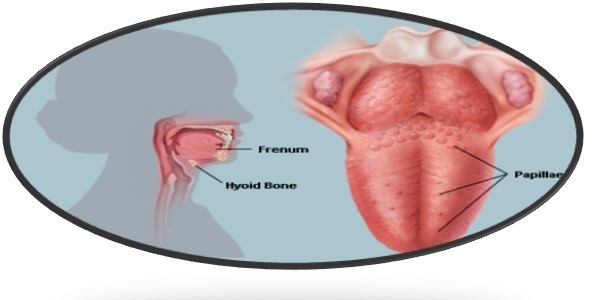
The tongue is a muscular organ in the mouth. The tongue is covered with moist, pink tissue called mucosa. Tiny bumps called papillae give the tongue its rough texture. Thousands of taste buds cover the surfaces of the papillae. Taste buds are collections of nerve-like cells that connect to nerves running into the brain. 

 The tongue is anchored to the mouth by webs of tough tissue and mucosa. The tether holding down the front of the tongue is called the frenum. In the back of the mouth, the tongue is anchored into the hyoid bone. The tongue is vital for chewing and swallowing food, as well as for speech.

 The “tongue” is used throughout Scripture in both literal and metaphorical ways, especially in Psalms, Proverbs and James. The tongue is a “small part of the body” (James 3:5), yet Proverbs 18:21 says it “has the power of life and death.” This holds true whether we’re speaking of spiritual, physical or emotional “life and death.”

 We should keep in mind that the word “tongue” is often a reference to the spoken word. This is a special kind of figure of speech called metonymy, in which one word stands in for another, closely related word. A common example of metonymy is seen in this sentence: “The White House issued a statement.” Of course, the White House, as a building, cannot issue statements; however, in this instance, White House refers to the President, who lives there. In the same way, when Proverbs 15:4 states, “A deceitful tongue crushes the spirit”, tongue is a metonymy. Obviously, a literal, fleshly tongue cannot crush the human spirit, but the words the tongue produces can.

Your speech will either help or hurt you (Pro. 10:14 – “The wise store up knowledge, but the mouth of a fool invites ruin”; Pro. 12:14 – “From the fruit of their lips people are filled with good things, and the work of their hands brings them reward”; Pro. 13:2-3 – “2. A man shall eat well by the fruit of his mouth, But the soul of the unfaithful feeds on violence. 3. He who guards his mouth preserves his life, But he who opens wide his lips shall have destruction”; also see Pro. 18:6-7, 23). If you are older, it already has! Many have ruined their lives by not ruling their mouths. Others have been exalted for their kind and wise tongues. Your speech will bring either blessing or cursing on you from both God and men, in both time and eternity. Do you love good speech or bad speech? Your future will be impacted heavily by your choice of words and habit.

 A tongue can kill or save others’ lives. A false witness can cause the death of an innocent man, or a comforter can restore a dejected, depressed or miserable man by an uplifting word. A slanderer can kill the reputation of a good man, or a wise counselor can guide a young man through the dangers of youth. A seducing girl or woman can ruin a man’s life, or a godly mother can teach her children the truth. A tongue definitely affects others, but that is not the lesson here.

 The tongue also affects speakers. The death and life in the power of the tongue are the effects of your speech on yourself. You learn this by the second clause in our text, which teaches that those loving their use of the tongue will eat either the fruit of death or life. You also know this by the context, for the previous proverb reads, “A man’s belly shall be satisfied with the fruit of his mouth; and with the increase of his lips shall he be filled” (Pr 18:20).

 Consider the love of speech, which is a key in this proverb. Even evil men can say good things when it is to their greedy purposes to do so, and good men slip from time to time and say things they should not (Pr 23:6-8; Eccl 10:1). But only good men truly love good speech, and only evil men truly love evil speech. The law of the proverb is based on what kind of speech you love – the speech you commit your heart, mouth, and habits toward.

 When you see a man failing in life, he likely did not rule or bridle his tongue. You can see the failure in his marriage(s), with his children, and in his profession. Criticism and harshness cost him affection. Exaggerations and extreme words cost him trust. Complaining and whining cost him influence. Arrogance and disrespect of authority cost him promotions. Too many words cost him listeners. Backbiting and talebearing cost him respect. Foolishness and jesting cost him honor. Unkept promises made him a liar. He is dead!

 He committed suicide with his tongue! He ate the fruit of death! He used the power of his tongue to his own destruction. He would not rule his spirit or teach his tongue wisdom (Pr 16:23, Pr 25:28). Therefore, both God and men punished him for his verbal folly. God turned to be his enemy, and men avoided him and cut him out of their friendships and profitable endeavors. He used the power of his tongue to his own destruction and death.

 Other men rise like cream to the top, because they rule their speech. They limit words (Pr 10:19; 17:27-28). They use gentleness rather than bluster (Pr 15:1; 25:15). They speak only the certain words of truth (Pr 22:17-21). They never talk against a man not present (Pr 16:28; 26:20-22). They study and think before speaking (Pr 15:28). They are always thankful. They seldom speak up unless asked (Pr 18:13; 29:11; Jas 1:19). Their gracious speech wins the hearts of men and women – they are soon friends with the king (Pr 16:13; 22:11). They are a tree of life to others and to themselves (Pr 10:11; 13:3; 15:4). Their words minister grace to hearers.

 When a woman is a failure, she likely did not rule her tongue. Harsh and critical speech, nagging reminders, snotty retorts, or constant suggestions destroyed her husband’s affection – she killed her marriage. Her children cannot wait to get out of the house, because the overbearing and continual criticism is too much to bear. She is odious! She has no friends, because everyone hates an odious woman. She committed marital, domestic, and social suicide with her tongue. She ate the fruit of death. She is dead.

 A gracious woman is always honored (Pr 11:16). The rule is simple and absolute – a woman that rules her tongue will have many friends and a glorious reputation. She has the law of kindness in her mouth, and she only speaks when she has something wise and important to say (Pr 31:26). She never speaks to hear herself talk, to offer trivialities, to correct minor details, or to make sure she contributes more than others in a group. She has a meek and quiet spirit – one that hates talking without a noble purpose (I Pet 3:3-4).

 Young man, learn sound speech before it is too late. Keep company only with gracious and wise men, who rule their mouths. Reject every man with a foolish and loud mouth. Learn Solomon’s wisdom about teaching your lips (Pr 4:24; 6:12; 8:13; 10:31-32; 15:28; 16:23). You can greatly enhance your future by learning good speech for all occasions.

 Young woman, you should learn and practice the same things. If you do not, you will have difficulty finding a man that will ruin his life by marrying you. An odious woman is a terrifying threat to men, and a young man can discover you with his ears. You must despise idle chatter, giggling, foolish talking, opinionated debate, or other odious traits.

 Old man, you are already eating the fruit of your mouth. The only hope you have is to confess your sins of speech to God and men, speak only gracious and wise words when asked, and beg God for the wisdom and strength to rule your unruly tongue. Learn Paul’s advice for you to be sober and grave, so cut out jesting and foolish talking (Tit 2:1), Col. 4:6.

 Old woman, you have likely scarred your husband’s heart. And your children, while not telling you, rejoice when they can get away from you or end a phone conversation. How many crave your presence and pursue conversation with you? If the number is low, you have a speech problem. Follow the advice given to the old man and trust God for mercy.

 Spiritual Implication:

What our tongue produces has eternal implications, for it reveals what is in our heart. Jesus said that “the good man brings good things out of the good stored up in him, and the evil man brings evil things out of the evil stored up in him” (Matthew 12:35). Isaiah places words on par with actions for displaying a sinful heart (Isaiah 59:2-3). “Men will have to give account on the day of Judgment for every careless word they have spoken” (Matthew 12:36). In and of ourselves, we are utterly unable to “tame the tongue” because “it is a restless evil, full of deadly poison” (James 3:8). A tongue under control is a mark of the Spirit’s power. Apart from accepting Jesus’ atonement on the cross, we will be judged according to our words: “For by your words you will be acquitted, and by your words you will be condemned” (Matthew12:37).

Emotional Implication:

Emotions are powerfully affecting, yet they are vulnerable to injury. James describes the tongue as “a fire” (James 3:6) – and who has not been burned by it? Proverbs 15:4 describes a “healing” tongue as “a tree of life.” As much as love is an action, what would romance be without words? Encouragement often comes through spoken words. So does discouragement. “Reckless words pierce like a sword” (Proverbs 12:18). The wound is emotional, and it is deep. What we say can have a profound effect on others.

Physical Implication:

In order to take Proverbs 18:21 literally – that the tongue can cause physical life and death – we do not need to tax our imagination. Words create actions, good and bad. A judge or jury, by simply saying a word, can cause a person to be killed or to live. Words often save lives: a doctor advises surgery, a weatherman issues a tornado warning; a counselor gives hope to a suicidal person. Conversely, words can also kill: murders are often initiated because of arguments or verbalized hatred. In the sense of causing action, then, the tongue does indeed have the power of life and death.

Conclusion:

God made us expressive beings, so we are nearly lost without communication. That is why we have audio recordings and Braille for the blind, sign language for the deaf, and writing for anyone who has something to say from afar. Indeed, speech has enormous implications, especially as a vehicle for sharing the gospel (Romans 10:14). Therefore, we are commanded to control the tongue, to “keep [it] from evil and your lips from speaking lies” (Psalm 34:13). A Christian’s speech should consistently honor the Lord: with the tongue “we praise our Lord and Father, and with it we curse men, who have been made in God’s likeness. Out of the same mouth come praise and cursing. My brother and sisters, this should not be” (James 3:9-10).

Brethren, your words will bring death or life in this world and the next. Jesus said, “But I say unto you, that every idle word that men shall speak, they shall give account thereof in the day of judgment. For by thy words thou shalt be justified, and by thy words thou shalt be condemned” (Matt 12:36-37). Death and life are in your tongue. Choose life! Eph.4:29 says, let no corrupt communication proceed out of your mouth, but that which is good to the use of edifying, that it may minister grace unto the hearers.

 Prayer Points

Father, let the Holy Ghost fire possess my tongue in Jesus name.
Father, help me bridle my tongue so that it will not lead me to hell fire
Father, Let my speech be always with grace, seasoned with salt
Father, make me a living example to the world around me in word, and conversation.
Father, cancel every evil words I have spoken concerning my life and neighbors.

 Dcn. Mike Ben


Jesus, our Scapegoat – Part 2, by Deacon Mike Ben

John 19:16 “Then he delivered Him to them to be crucified, so they took Jesus and led Him away”

 Implication
To Christians, both of these rites are regarded as a foreshadowing of (and must therefore find their ultimate meaning in) the future sacrificial Crucifixion of Jesus Christ.

Christians believe that, through dying on the cross, Christ not only “propitiated” God’s wrath over sin, but also “expiated” us from carrying the burden of sin, by actually doing away with it as Jesus-Christ-Our-Scapegoat.

 Propitiation:  By “propitiation” we come to understand the notion of “imputed righteousness”. We believe that even though we still remain sinners, from God’s perspective, we appear as being covered and shielded by “the righteousness of Christ” and are therefore “counted” as righteous!

 Expiation: By “expiation” on the other hand, we come to understand that we have actually been physically “cleansed” of our sins and thereby “made righteous”. Jesus does not just hide our sin but in fact completely removes them, enabling us to “appear righteous” in the eyes of God!

 Jesus, being both Jesus Christ “The Lords Goat”, as well as “Jesus-Christ-Our-Scapegoat”, therefore fulfilled both of these roles. He is our savior and our redeemer fulfilling both of these sacrificial roles, not because we deserve it, but out of His love for us! Ephesians 2:4-9

 
The Scapegoat

The Scapegoat

A foreshadow of Jesus-Christ-Our-Scapegoat


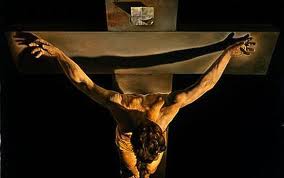
  Jesus-Christ-Our-Scapegoat Crucified

Jesus-Christ-Our-Scapegoat Crucified

  Jesus has been all night in agony, He had spent the early morning at the hall of Caiaphas, He had been hurried from Caiaphas to Pilate, from Pilate to Herod, and from Herod back again to Pilate; He had therefore, but little strength left, and yet neither refreshment nor rest were permitted Him. They were eager for His blood, and therefore led Him out to die, loaded with the cross.  “The old rugged cross”- This is the most beautiful song ever… I will always cherish the cross that Jesus died for me and all sinners.

 What do we learn here as we see our blessed Lord led forth? Do we not perceive that truth which was set forth in shadow by the scapegoat? Did not the high-priest bring the scapegoat, and put both his hands upon its head, confessing the sins of the people, that thus those sins might be laid upon the goat, and cease from the people? Then the goat was led away by a fit man into the wilderness, and it carried away the sins of the people, so that if they were sought they could not be found. 

 Now we see Jesus brought before the priests and rulers, who pronounced Him guilty; God himself imputes our sins to Him, “the Lord hath laid on Him the iniquity of us all;” “He was made sin for us;” and, as substitute for our guilt, bearing our sins upon his shoulders, represented by the cross; we see the great Scapegoat led away by the appointed officers of justice. Beloved, can you feel assured that He carried your sins?  As you look at the cross upon His shoulder, does it represent you sin? There is one way by which you can tell whether He carried your sin or not, and trusted.  Have you laid your hands upon His head, confessed your sins, and trust in Him? Then your sin lies not on you; it has all been transferred by blessed imputation to Christ, and He bears it on His shoulder a load heavier than the cross.

 Conclusion
Let not the picture vanish till you have rejoiced in your own deliverance, and adores the loving Redeemer upon whom your iniquities were laid. He paid the expensive price for our redemption, what no one can do, yes He paid it all.  However, Jesus did become sin and therefore, He became sickness that we might become holy and healthy and walk in His health. Jesus did not commit a sin to become sin. No, it was put upon Him by God the Father. Jesus walked in righteousness until the time of the cross, and there on the cross, He accepted to take the sins of the World upon Himself. We do not have to commit a righteous act to become righteous; we openly accept the righteousness of Jesus; it is a free gift. The work of the cross is the divine exchange. He exchanged our sins for His righteousness. We have become the righteousness of God! Glory be to God! Hosanna, Hosanna in the Highest.

 Happy Easter Celebration.

 Dcn. Mike Ben                                                                                             


The Elect of God, by Deacon Mike Ben

Several years ago, an elderly man was preaching in a ‘danfo bus’ within Lagos and put this question before the passengers “Who are the elects of God?”  The message touched my heart and I resolved to be one of the elects of God.  Basically, the “elect of God” are those whom God has predestined to salvation. They are called the “elect” because that word denotes the concept of choosing. Every four years in Nigeria, we “elect” a President – i.e., we choose who will serve in that office. The same goes for God and those who will be saved; God chooses those who will be saved. These are the elect of God.

As it stands, the concept of God electing those who will be saved isn’t controversial. What is controversial is how and in what manner God chooses those who will be saved. Throughout church history, there have been two main views on the doctrine of election (or Predestination). One view, which we will call the prescient or foreknowledge view, teaches that God, through His omniscience, knows those who will in the course of time choose of their own free will to place their faith and trust in Jesus Christ for their salvation. On the basis of this divine foreknowledge, God elects these individuals “before the foundation of the world.” Ephesians 1:4 says “For he chose us in him before the creation of the world to be holy and blameless in his sight in love.” This view is held by the majority of American evangelicals.

The second main view is the Augustinian view, which essentially teaches that God not only divinely elects those who will have faith in Jesus Christ, but also divinely elects to grant to these individuals the faith to believe in Christ. In other words, God’s election unto salvation is not based on a foreknowledge of an individual’s faith, but is based on the free, sovereign grace of Almighty God. God elects people to salvation, and in time these people will come to faith in Christ because God has elected them.

The difference boils down to this: who has the ultimate choice in salvation – God or man? In the first view (the prescient view), man has control; his free will is sovereign and becomes the determining factor in God’s election. God can provide the way of salvation through Jesus Christ, but man must choose Christ for himself in order to make salvation real. Ultimately, this view makes God powerless and robs Him of His sovereignty. This view puts the Creator at the mercy of the creature; if God wants people in heaven, He has to hope that man will freely choose His way of salvation. In reality, the prescient view of election is no view of election at all, because God is not really choosing – He is only confirming. It is man who is the ultimate chooser.

In the Augustinian view, God has control; He is the one who, of His own sovereign will, freely chooses those whom He will save. He not only elects those whom He will save, but He actually accomplishes their salvation. Rather than simply make salvation possible, God chooses those whom He will save and then saves them. This view puts God in His proper place as Creator and Sovereign.

The Augustinian view is not without problems of its own. Critics have claimed that this view robs man of his free will. If God chooses those who will be saved, then what difference does it make for man to believe? Why preach the gospel? Furthermore, if God elects according to His sovereign will, then how can we be responsible for our actions? These are all good and fair questions that need to be answered. A good passage to answer these questions is Romans 9, the most in-depth passage dealing with God’s sovereignty in election.

The context of the passage flows from Romans 8, which ends with a great climax of praise: “For I am convinced that… [nothing] in all creation, will be able to separate us from the love of God that is in Christ Jesus our Lord” (Romans 8:38-39). This leads Paul to consider how a Jew might respond to that statement. While Jesus came to the lost children of Israel and while the early church was largely Jewish in makeup, the gospel was spreading among the Gentiles much faster than among the Jews. In fact, most Jews saw the gospel as a stumbling block (1 Corinthians 1:23) and rejected Jesus. This would lead the average Jew to wonder if God’s plan of election has failed, since most Jews reject the message of the gospel.

Throughout Romans 9, Paul systematically shows that God’s sovereign election has been in force from the very beginning. He begins with a crucial statement: “For not all who are descended from Israel are Israel” (Romans 9:6). This means that not all people of ethnic Israel (that is, those descended from Abraham, Isaac and Jacob) belong to true Israel (the elect of God). Reviewing the history of Israel, Paul shows that God chose Isaac over Ishmael and Jacob over Esau. Just in case anyone thinks that God was choosing these individuals based on the faith or good works they would do in the future, he adds, “Though they [Jacob and Esau] were not yet born and had done nothing either good or bad – in order that God’s purpose of election might continue, not because of works but because of him who calls” (Romans 9:11).

 At this point, one might be tempted to accuse God of acting unjustly. Paul anticipates this accusation in v. 14, stating plainly that God is not unjust in any way. “I will have mercy on whom I have mercy, and I will have compassion on whom I will have compassion” (Romans 9:15). God is sovereign over His creation. He is free to choose those whom He will choose, and He is free to pass by those whom He will pass by. The creature has no right to accuse the Creator of being unjust. The very thought that the creature can stand in judgment of the Creator is absurd to Paul, and it should be so to every Christian as well. The balance of Romans 9 substantiates this point.

 As already mentioned, there are other passages that talk to a lesser extent on the topic of God’s elect (John 6:37-45 and Ephesians 1:3-14, to name a couple). The point is that God has ordained to redeem a remnant of humanity to salvation. These elect individuals were chosen before the creation of the world, and their salvation is complete in Christ. As Paul says, “For those whom he foreknew he also predestined to be conformed to the image of his Son, in order that he might be the firstborn among many brothers. And those whom he predestined he also called, and those whom he called he also justified, and those whom he justified he also glorified” (Romans 8:29-30).

 Conclusion:
The only way to become the Elect of God is through the Blood of Jesus Christ. When you repent of your sins and ask Jesus Christ into your heart then you are in the Elect of God. See God sent his only begotten Son Jesus the Christ to earth to die on the cross for our sins. He chooses to give that free gift to all that want to receive it but it is our choice on whether we accept it or not. Romans 8:33, Mark 13:22, Colossians 3:12, I Peter 1:2.

 Dcn. Mike Ben


Jesus, our Scapegoat – Part 1, by Deacon Mike Ben

John 19:16 “Then he delivered Him to them to be crucified, so they took Jesus and led Him away”

 Introduction
The origins of the term “scapegoat” come from Leviticus 16 and the sacrifice at the heart of the Day of Atonement. Leviticus 16:6-10 provides a summary of the offerings: bull for the high priest’s sin offering and then two goats – one for God and their sin offering and one for the picture we infer from the goat sent into the wilderness. It is interesting and noteworthy that atonement must first be made for Aaron. “No minister can lead people where he has not been. No person can speak of the forgiveness of sins whose own sins have not been forgiven…The Day of Atonement began with Aaron, not with the people.” (Of course, Christ had no such need. Compare Hebrews 5:1-3 and Hebrews 7:26-28).

 Meaning of Scapegoat
Scapegoat means one who bears blame unfairly or a person who is unfairly blamed for something that others have done – is derived from a ceremony recorded in Leviticus 16.  Since a goat was sent into the wilderness to bear the sins of the Israelites, many presume this scapegoat called azazel in Hebrew is Jesus Christ. Others say Satan wants us to view him as a scapegoat, someone unjustly blamed for sin by an unfair God. The ceremony where God personally identifies this goat delivers some of the most profound lessons we can learn about the Day of Atonement—and identifies the azazel for what he is.

 The Hebrew word for “scapegoat” here is azazel, and it means “the goat of departure” or the goat of escape. According to the Merriam-Webster Dictionary, though, scapegoat means “one that bears the blame for others.” But notice, the original Hebrew word azazel has no implication of bearing blame; rather, the azazel is simply a goat of departure. Leviticus 16:8 says that one lot is for the Lord and the other is for the azazel – not for the Lord. The goat that the Lord’s lot fell on was to be slain, just as Jesus Christ was slain (verse 9). The azazel would not be slain, but driven alive into the wilderness (verse 10).

In Leviticus 16:20-22, the scapegoat’s role is presented in more detail. They were to “lay both hands on the head of the live goat and confess over it all the wickedness and rebellion of the Israelites – all their sins and put them on the goat’s head”. (This parallels the principle of substitutionary atonement seen throughout the sacrificial system but highlighted here for this one special day.) Then the goat was sent into the desert and verse 22 says that “the goat will carry on itself all their sins to a solitary place”. (Interestingly, some people believe that Christ was baptized on Day of Atonement and then went to the desert.)

 Two Identical Goats
In ancient Israel, God commanded that a special ceremony take place on the Day of Atonement. In Leviticus 16:5, we read that the high priest was to take two kids of the goats as a sin offering. But first, Aaron, high priest at the time, was to offer a sin offering for himself (verse 6). Then we read about the instructions regarding these two goats: “And he shall take the two goats, and present them before the Lord at the door of the tabernacle of the congregation. And Aaron shall cast lots upon the two goats; one lot for the Lord, and the other lot for the scapegoat” (verses 7-8).
Goat No. 1 symbolizes forgiveness and its blood price; goat No. 2, the scapegoat, symbolizes repentance, removal of sin and guilt. Of course, in Christian theology, the ordering of the two goats is important. One last thought: we improperly apply the concept of scapegoat ironically, by blame-shifting.

 After the azazel was sent into the wilderness, both the high priest and the fit man (before he returned to the camp) had to wash themselves and their clothes (Leviticus 16:23-26).

This “fit man” represented the angel in Revelation 20:1-3 who will lay hold of the dragon and seal him in the bottomless pit when this day is fulfilled.

 The commentaries are divided as to whether the azazel is Jesus Christ or Satan the devil – but the Bible makes the answer plain. This really shouldn’t be surprising because even the high priest could not tell which goat was which; God Himself would reveal which goat represented Christ and which represented Satan only after the high priest had solemnly appealed to Him through the casting of lots. If the azazel were simply another representation of Christ, there would be no real need to distinguish between the two goats—but there is a real need, and one that we face daily. The truth is, without God’s direct intervention, even we can’t tell Satan apart from Jesus Christ! Satan would like nothing better than for us to mistake him for our Savior and High Priest.

 Today, our sins have been forgiven by Jesus Christ’s sacrifice; when the Day of Atonement is fulfilled, the original blame for these sins will be put back where it belongs: on Satan the devil, who will be completely removed from the presence of God and suffer mental torment forever as justice demands (Revelation 20:10).

 The Reason for the Scapegoat
The scapegoat is a type or figure of Christ’s atonement to save mankind in the Old Testament Sanctuary service. When our first parents sinned in Eden, they would have died at that very instance if Jesus had not provided a way out to save them. Gen 3:15 (NIV) – “And I will put enmity between you and the woman, and between your offspring and hers; he will crush your head, and you will strike his heel.”

 To be continued.

 Dcn. Mike Ben


Pathway to Overflowing, part 2, by Deacon Wole Bodunde

In the part one of this message, we mentioned that there is no stagnation in life without a cause and, where there is no rain, there will be stagnation, fruitlessness, struggles and unprofitability. We also mentioned some conditions to be fulfilled in order to experience overflowing, namely: Access to Right information; Get yourself into the Ark of Safety; You must think God’s thought. Here are other conditions:

Believe GOD for your victory

Psalm 105:14-15- ‘He suffered no man to do them wrong: ye He reproved kings for their sakes; saying touch not my anointed, and do my prophet no harm.’

To attract God’s favour and backing in life is to have absolute trust in His thought concerning you. Noah believed God and did the unusual by building the ark and saved his household. (Gen.7:5-7). While the rain from heaven was acting as a destructive agent against God’s enemies (enemies of righteousness) the same rain acted as a means of divine upliftment and comfort for God’s people.

Make up your mind today if you want to overflow and the glory of God will come to your life. Where others sowed and could not reap, you will sow and reap in abundance. When men are crying over the threat of death, you shall rejoice over life and peace. When men are dying of  lack and famine, you shall look for who to distribute your excesses to.

Complete Obedience

Obedience to the words of God is very germane to overflowing. It is recorded that Abraham obeyed God completely and he became blessed and His blessing flows from generation to generation.

Fear of the Lord

Psalm 25:14-The secret of the Lord is with them that fear him, and He will shew them his covenant.”

Psalm 128:1-Blessed is every one that feareth the Lord that walketh in His ways. Psalm 147: 11. “The Lord taketh pleasure in them that fear Him, in those that hope in His mercy’

The above passages confirmed how God takes pleasure in those that fear Him, Hence it is very important to adapt your life to fearing God to have a guaranteed overflowing.

Giving

Giving is an attribute of God. He gave the most precious (Son) to salvage humanity at His own expense. Prov. 11:24- “There is that scattereth and yet increaseth, and there is that with holdeth more than is meet, but it tendereth to poverty.

We should give, not in the house of God alone, but to as many that we are privileged to give.

No doubt if you follow all the mentioned principles, you will experience divine overflowing.

Remain blessed.

Don. Wole Bodunde


The Consequences of Sin, by Deacon Mike Ben

A lot of people have asked this question “If Jesus paid the price for our sin, why do we still suffer the consequences of our sin?”

 The Scriptures state, “For the wages of sin is death, but the free gift of God is eternal life through Christ Jesus our Lord” (Romans 6:23). Christ paid the penalty for our sin. We all deserve death, which is the ultimate penalty for sin. Everyone will pay for his sin unless he comes to Christ, who has paid the price for our sin with His blood. Adam and Eve suffered consequences for their sin by being expelled from the Garden. Instead of using the word “consequences,” we should think of the word “discipline.” The writer of Hebrews says about discipline and its purpose, “And have you entirely forgotten the encouraging words God spoke to you, his children? He said, my child, don’t ignore it when the Lord disciplines you, and don’t be discouraged when he corrects you. For the Lord disciplines those he loves, and he punishes those He accepts as his children”.

“As you endure this divine discipline, remember that God is treating you as his own children. Whoever heard of a child who was never disciplined? If God doesn’t discipline you as he does all of his children, it means that you are illegitimate and are not really his children after all. Since we respect our earthly fathers who disciplined us, should we not all the more cheerfully submit to the discipline of our heavenly Father and live forever? For our earthly fathers disciplined us for a few years, doing the best they knew how. But God’s discipline is always right and good for us because it means we will share in his holiness. No discipline is enjoyable while it is happening—it is painful! But afterward there will be a quiet harvest of right living for those who are trained in the way” (Hebrews 12:5-11)

God shows His love by correcting us and/or using discipline to bring us to where He wants us to be. What does a good father do when he sees his child straying away from the right path to go his own way? He brings him back by means of discipline. Now discipline can come in many forms, depending on the seriousness of the offense. If a child is never disciplined or never suffers the consequences for his wrong action, he will never learn what is right.

Therefore, out of love, God disciplines those who are His. If you never suffered the consequence of your sin, how would you know when you are doing right or wrong? The psalmist says, “Will those who do evil never learn? They eat up my people like bread; they wouldn’t think of praying to God” (Psalm 53:4). See also Psalm 10:11, “The wicked say to themselves, ‘God isn’t watching! He will never notice!’” If God did not bring about consequences, we would not learn from our mistakes and change our ways. God only disciplines those who are His, and He does this out of love for us, not to harm us or tear us down. It is God’s way of saying, “My child, you are going the wrong way, and it is time to turn around and do what is right.” If we are not corrected when we do wrong, then we will keep doing wrong.

God has paid the penalty for our sins so we will not have to suffer the second death, which is hell (Revelation 20:14). Because of His love for us, He disciplines us and brings us into the relationship with Him that He desires. So the next time you feel you are suffering consequences for your sin, remember it is God disciplining you out of love.

Finally, acts of disobedience to God’s laws will very often result in temporal consequences that have nothing to do with God’s discipline. For example, a murderer who comes to Christ and repents of all his sin will receive God’s forgiveness in the eternal sense, and he will enjoy full fellowship with God for eternity in heaven. However, the society in which he lives will still demand that he pay the price for his crime in a temporal sense. He may have to spend his entire life in prison or even be executed for his crime. But even in these situations, he can be greatly used of God while he waits for his ultimate redemption and eternal joy.

 Stay Blessed.

 Mike Ben